Camping in Hot Weather: How to Stay Cool and Safe in an Aussie Summer
Disclosure: As an Amazon Associate, OutbackKit earns from qualifying purchases. Some links on this page are affiliate links, so we may earn a small commission if you buy through them, at no extra cost to you. We only point to gear we’d be happy to take on our own trips.
Summer camping in Australia can be brilliant: long days, warm water and balmy nights. It can also be brutal, with hot tents, heat-stressed kids and food that spoils fast. A bit of planning makes a big difference. Here’s how to stay cool, comfortable and safe.
Heat illness can be serious. If someone shows signs of heat stroke, call Triple Zero (000) immediately.
Pick the right place and time
- Go where it’s cooler. Coastal, high-country and tableland campsites are usually more comfortable in summer than inland sites.
- Avoid the hottest inland areas in the peak of summer. Our guide to the best time to camp in the outback explains why.
- Watch the forecast for heatwaves and fire danger. Be ready to change plans.
- Check fire bans every day. Read our campfire safety guide.
Choose a cool campsite
- Shade matters most, especially in the afternoon. Notice where the sun will be at 3pm, not just when you arrive.
- Catch the breeze. Face tent doors and windows towards the prevailing breeze.
- Don’t camp under large gum trees, which can drop limbs, especially in hot weather.
- Near water is nice, but stay a safe distance back from rivers and creeks that can rise quickly.
Keep your shelter cool
- Ventilation is everything. Open doors, windows and vents. Mesh panels help a lot.
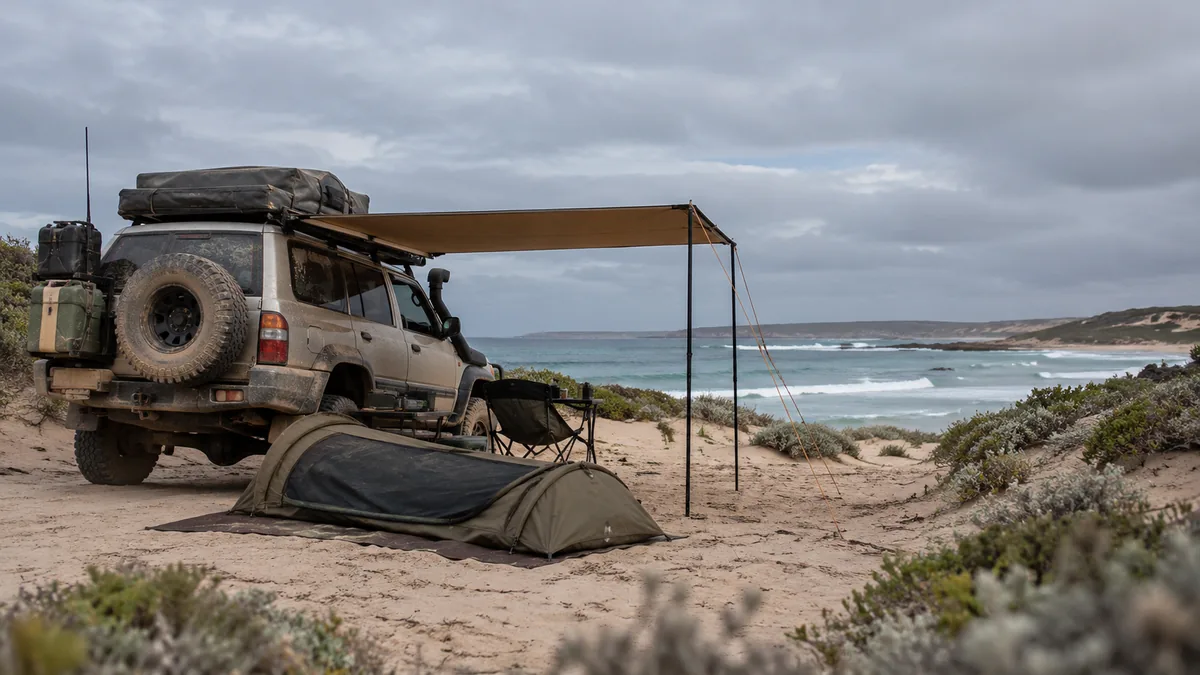
- Add shade over the tent. A tarp or awning above the tent, with a gap between them, blocks a lot of direct sun. (camping tarps on Amazon)
- Set up late or take the fly off on clear, dry nights where it’s safe to do so.
- Consider your shelter type. Our rooftop tent vs ground tent vs swag and swag vs tent guides compare how each handles heat.
Sleep better on hot nights
- Swap your sleeping bag for a cotton sheet or light quilt.
- Use a cotton pillowcase and sleep on top of your mat rather than inside a bag.
- Rinse off before bed if water allows.
- A small battery fan can help, if you have the power for it. See our portable power station vs dual battery guide. (rechargeable camping fans on Amazon)
Stay hydrated
- Drink regularly, before you feel thirsty.
- Carry more water than you think you need. Our camping water guide covers how much to bring.
- Keep drinks cool in the shade or in your fridge or esky.
- Go easy on alcohol in the heat.
Keep food safe
Heat spoils food fast. Keep perishables cold, keep your fridge or esky in the shade and open it as little as possible. Read how to pack an esky so ice lasts longer and our camp kitchen and food storage guide.
Sun protection
- Slip, slop, slap, seek, slide: clothing, sunscreen, a broad-brimmed hat, shade and sunglasses.
- Reapply sunscreen regularly, especially after swimming.
- Plan active things like hikes and setting up for early morning or late afternoon.
Know the signs of heat illness
Heat exhaustion can include heavy sweating, pale skin, dizziness, headache, nausea and weakness. Move the person somewhere cool, give them sips of water and cool them with wet cloths.
Heat stroke is a medical emergency. Signs can include confusion, slurred speech, collapse, or hot skin that may be dry. Call 000, and cool the person as quickly as possible while you wait.
Kids, older people and pets are more vulnerable. Keep an eye on them, and never leave anyone in a parked car. See our first aid and emergency comms guide.
Further reading
The bottom line
Pick a cooler destination and a shady site, ventilate your shelter, drink plenty, keep food cold and stay out of the midday sun. Learn the signs of heat illness, and don’t be afraid to cut a trip short if a heatwave rolls in.