Snakes, Spiders and Wildlife Safety When Camping in Australia
Disclosure: As an Amazon Associate, OutbackKit earns from qualifying purchases. Some links on this page are affiliate links, so we may earn a small commission if you buy through them, at no extra cost to you. We only point to gear we’d be happy to take on our own trips.
Australia’s wildlife has a scary reputation, but serious incidents at campsites are uncommon, and most can be avoided with a few simple habits. Here’s how to share the bush safely with snakes, spiders and everything else.
This is general information, not medical advice. Do a recognised first aid course before remote trips. In an emergency, call Triple Zero (000).
Snakes
Most snakes want nothing to do with you. Bites often happen when people try to catch, kill or move a snake.
Avoiding snakes
- Leave them alone. Back away slowly and give the snake space to move off.
- Wear closed shoes and long pants in long grass, especially at dusk and at night.
- Use a torch at night. Snakes can be active on warm evenings. Our headtorch and camp lighting guide helps here.
- Keep camp tidy. Don’t leave gear, rubbish or food scraps lying around, which can attract rodents and in turn snakes.
- Zip tents and swags closed, and shake out boots and bedding before use.
- Watch where you put your hands when collecting firewood or lifting logs and rocks.
If someone is bitten
- Call 000.
- Keep the person still and calm. Movement can help venom spread.
- Apply a pressure immobilisation bandage: a firm, broad bandage over the bite and then up the whole limb, then splint the limb to keep it still.
- Don’t wash the bite, cut it or use a tourniquet, and don’t try to catch the snake.
- Treat any snake bite as potentially dangerous, even if it doesn’t hurt.
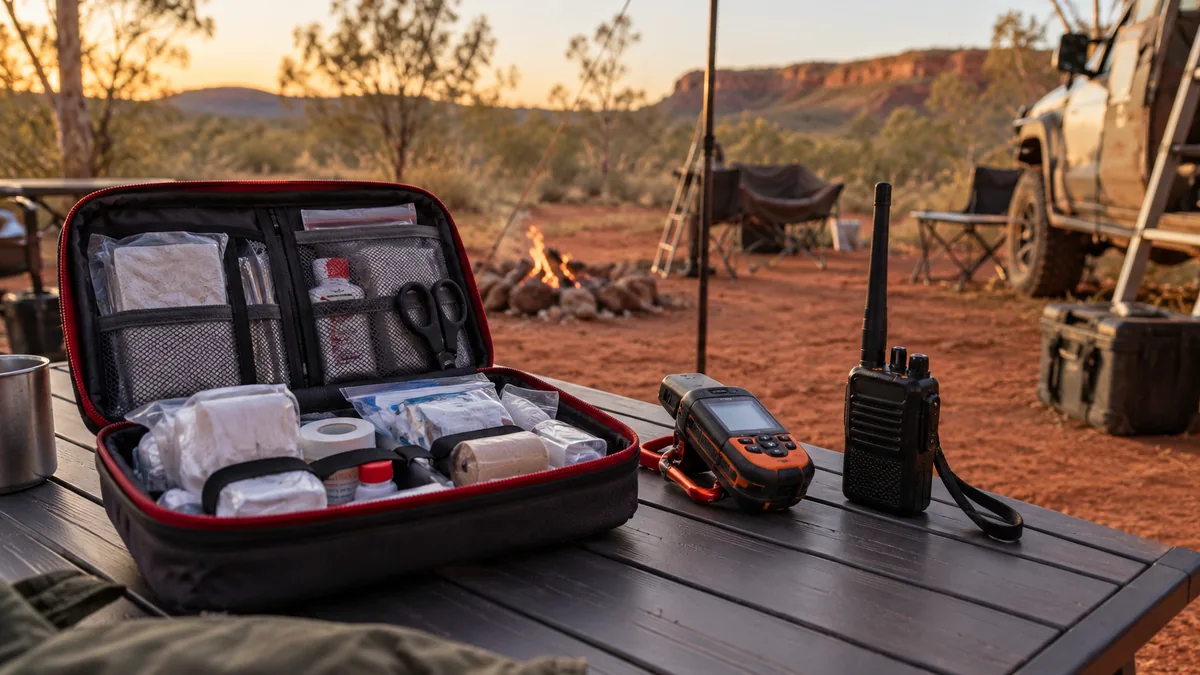
Carry at least two broad elastic compression bandages in your first aid kit. (compression bandages on Amazon)
Spiders
- Shake out shoes, clothes, gloves and bedding, especially if left outside overnight.
- Wear gloves when handling firewood or gear that’s been stored.
- Funnel-web spiders (found in parts of eastern Australia, including around Sydney) are dangerous. For a suspected funnel-web bite, call 000 and apply a pressure immobilisation bandage, like a snake bite.
- Redback bites are usually treated differently: don’t use a pressure bandage. Apply a cold pack and seek medical advice, especially if pain is severe or spreading.
Ticks, mosquitoes and insects
- Use insect repellent, and cover up at dawn and dusk. (insect repellent on Amazon)
- Check for ticks after walking in bushland, especially along the east coast.
- Mozzie nets on tents and swags make a huge difference. (mosquito nets on Amazon)
- People with known severe allergies should carry their prescribed medication and make sure others know how to use it.
Keeping wildlife out of your food
Possums, goannas, birds, foxes, dingoes and even kangaroos can raid a campsite.
- Store food in sealed containers in your vehicle or a lockable box.
- Never feed wildlife. It’s harmful to them and can make them aggressive.
- Don’t leave rubbish out overnight.
- In dingo areas such as K’gari, strict rules apply. See our K’gari camping guide.
Our camp kitchen and food storage guide has more storage tips.
Water hazards
- Crocodiles live in northern Australian waters. Obey all warning signs, don’t swim where crocs may be present, and camp well back from the water’s edge.
- Marine stingers are a risk in tropical waters in the warmer months. Swim at patrolled beaches and follow local advice.
On the road
Animals on roads are a real risk, especially around dawn, dusk and at night. Slow down and avoid driving at those times in rural and outback areas if you can. Read planning a remote outback trip for more.
Be prepared
- Carry a well-stocked first aid kit with compression bandages.
- Know your location and have a way to call for help. See first aid and emergency comms for remote camping.
- If you’re camping with little ones, see camping with kids.
Further reading
The bottom line
Leave wildlife alone, keep camp tidy and food sealed, wear shoes and use a torch at night, and carry compression bandages. Know the basic first aid, and call 000 early if anyone is bitten.